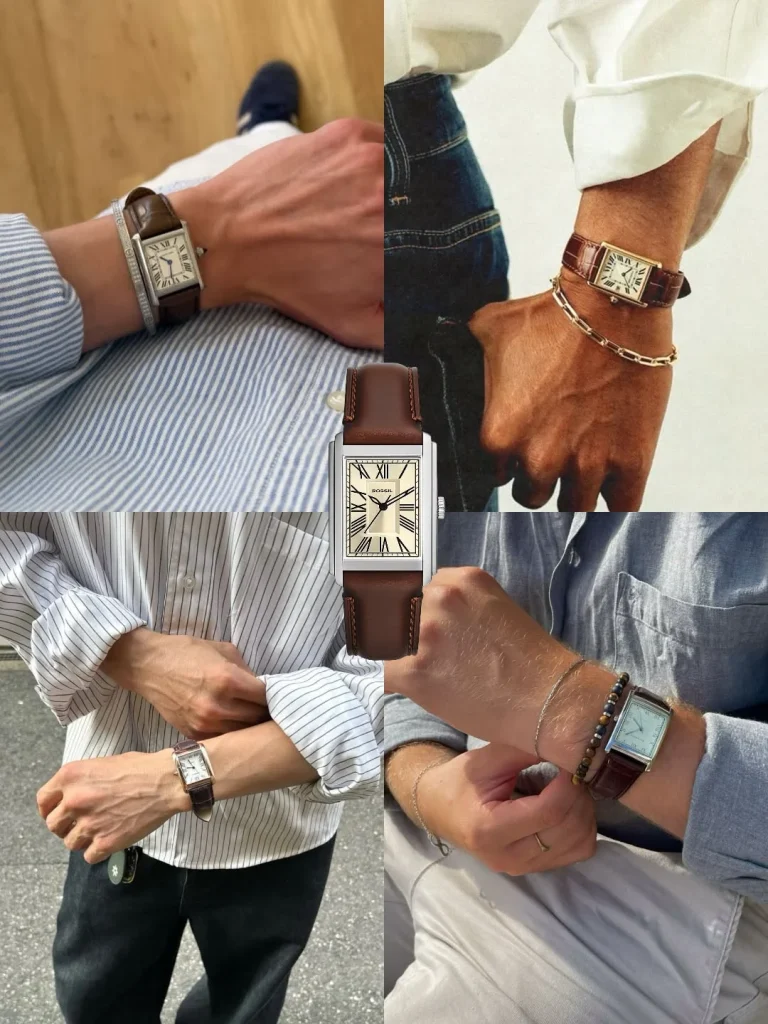
The Cartier Tonneau represents a pioneering design in luxury watchmaking, known for its distinctive barrel-shaped case that emerged in the early 20th century. This model challenged traditional round watch forms, introducing a curved, rectangular aesthetic that blended art and functionality. Collectors and enthusiasts value the Cartier Tonneau for its historical significance and elegant proportions.
What Does “Tonneau” Mean in Watch Design?
In French, “tonneau” translates to “barrel,” reflecting the watch’s curved, bulging sides that mimic a barrel’s shape. Unlike flat-sided rectangular watches, the Cartier Tonneau features a gently arched case with rounded edges, creating a three-dimensional effect on the wrist. This design enhances comfort and visual appeal, making it a standout in horology.
What Is the History Behind the Cartier Tonneau?
The Cartier Tonneau debuted around 1906, during a period of innovation in jewelry and watch design. It was part of Cartier’s exploration into Art Nouveau influences, with its flowing lines and asymmetry. Early models often featured enamel dials, guilloché patterns, and manual-wind movements, embodying the era’s craftsmanship. By the 1910s, it gained popularity among elite clientele for its sophisticated silhouette.
How Does the Cartier Tonneau Differ from Other Watch Shapes?
Traditional watches favor round or cushion cases, but the Cartier Tonneau’s tonneau form offers a more dynamic profile. Its length-to-width ratio, typically around 1.5:1, provides an elongated presence without overwhelming the wrist. The lugs integrate seamlessly into the case, creating a fluid line from strap to crown. This distinguishes it from boxier rectangular designs or simpler ovals.
What Are the Key Features of a Classic Cartier Tonneau?
Classic Cartier Tonneau watches showcase a platinum or gold case, often 30-35mm in length, with a sapphire cabochon crown. Dials feature Roman numerals or Breguet-style indices, paired with blued steel hands. Movements are high-quality manual calibers, emphasizing precision. Many vintage pieces include diamond bezels or intricate engravings, highlighting artisanal detailing.
Why Do Collectors Prize the Cartier Tonneau Today?
Modern interest in the Cartier Tonneau stems from its rarity and influence on contemporary designs. Vintage examples from the 1900s to 1930s command high value due to limited production and pristine condition requirements. The model’s role in shaping “dress watch” aesthetics continues to inspire reissues, maintaining its status as a horological landmark.
What Are Common Misconceptions About the Cartier Tonneau?
A frequent misconception is that all tonneau-shaped watches are Cartier Tonneaus; many brands adopted similar forms later. Another is assuming modern versions match vintage sizing—they often scale up for current tastes. Proper authentication requires expertise, as reproductions exist, underscoring the need for verified provenance in purchases.
In summary, the Cartier Tonneau endures as a symbol of innovative design, blending form, history, and wearability. Its barrel-like elegance remains relevant for those appreciating refined watchmaking heritage.
People Also Ask
Is the Cartier Tonneau suitable for everyday wear?
Yes, its slim profile and comfortable curve make it ideal for daily use, though vintage models require careful handling to preserve condition.
How can you identify an authentic Cartier Tonneau?
Look for hallmarks like serial numbers inside the caseback, precise proportions, and high-quality finishing on genuine pieces.
Are there modern versions of the Cartier Tonneau?
Contemporary iterations update the classic design with automatic movements and larger cases, paying homage to the original while adapting to modern preferences.