The short answer is **no**. While Rolex enjoys a reputation for exceptional value retention and is often associated with investment-grade timepieces, the vast majority of models do not consistently appreciate in the secondary market. Appreciation is the exception, not the rule, and is dependent on a confluence of scarcity, desirability, and market dynamics. This pillar page provides a comprehensive map of the topic, breaking down the myths, the models that truly gain value, and the economic forces at play.
—
### Topic Map: Understanding Rolex Value Appreciation
1. **Introduction: The Investment Myth vs. Market Reality**
2. **The Core Economics of Rolex Appreciation**
– Scarcity, Production Caps, and Supply & Demand
– The Role of Discontinuation and “Vintage” Status
3. **Models That Truly Appreciate: The "Investable Icons"**
– The Steel Sports Watch Triumvirate (Submariner, GMT-Master II, Daytona)
– The “Hype” Models: The Rolex “Rainbow” Daytona and “Tiffany” Dial Oyster Perpetual
– Vintage and Neo-Vintage Collectibles (Paul Newman Daytona, 5513 Submariner, 1016 Explorer)
4. **Models That Hold Value but Rarely Appreciate**
– Datejust, Day-Date ("President"), and the Professional Models (Explorer I, Air-King, Milgauss, Yacht-Master)
– The Rolex OP (Oyster Perpetual) Range
5. **The Toughest Market: Models That Depreciate**
– Two-Tone (Rolesor) and Full Gold Models (with exceptions)
– Diamond- and Gem-Set Models (Custom vs. Factory)
– Large Case Sizes (Deepsea, 44mm Yacht-Master II) and Niche Complications
6. **Critical Factors That Kill Resale Value**
– Condition (Originality, Polishing, Box & Papers)
– Service History and Aftermarket Modifications
– Provenance and Market Timing
7. **Market Mechanics: The Gray Market vs. Retail – Why "Appreciation" Is Misleading**
– AD Markup vs. Secondary Market Price
– The Waiting List and Hyped Demand Effect
8. **Practical Advice: Buying a Rolex as an Investment vs. a Wearable Asset**
9. **Internal Resources: Next Steps for the Buyer**
– [How to Check Rolex Authenticity]
– [Best Rolex for First-Time Buyers: Value vs. Investment]
– [Understanding Rolex Reference Numbers]
– [The Rolex Certified Pre-Owned Program Explained]
—
### 1. The Core Economics of Rolex Appreciation
To understand appreciation, you must first understand **scarcity**. Rolex is not a luxury goods company that floods the market. It deliberately produces fewer watches than the global demand, particularly for its steel sports models. This artificial scarcity creates a secondary market price that is often *higher* than the retail price (MSRP). A watch “appreciates” when its market price climbs *above* its original retail price.
**Key Drivers:**
– **Discontinuation:** When Rolex stops making a reference (e.g., the ceramic “Hulk” Submariner 116610LV), its value often spikes as collectors scramble for remaining stock.
– **Material & Demand:** Watches made of Oystersteel (904L steel) are currently the most speculative, as they are the hardest to obtain at retail.
– **Patent & Technology:** Watches with iconic, long-running movements (like the Caliber 3135) or unique innovations (the Cerachrom bezel) hold a premium.
**The Crucial Insight:** A Rolex purchased from an Authorized Dealer (AD) at MSRP has a far better chance of appreciating than one bought from a gray-market dealer, where the price already reflects future demand.
### 2. Models That Truly Appreciate: The "Investable Icons"
Only a small subset of Rolex production consistently demonstrates price growth over time.
– **The Steel Sports Watch Triumvirate:**
– **Rolex Submariner (No Date – 124060/114060):** The quintessential diver. The “no date” (without cyclops) is especially collectible.
– **Rolex GMT-Master II “Pepsi” (126710BLRO) & “Batman” (126710BLNR):** The bi-color ceramic bezels are highly sought after.
– **Rolex Daytona (116500LN):** The stainless steel, black ceramic bezel Daytona is arguably the most desired modern Rolex. Retail is a fraction of market value.
– **Hype & Limited Editions:**
– The **“Rainbow” Daytona** (116598RBOW) with multicolored sapphire baguettes consistently breaks records.
– The **Oyster Perpetual “Tiffany” dial (ref. 124300)** saw a meteoric, though potentially fragile, rise due to its unique blue color.
– **Vintage & Neo-Vintage (Pre-2000s):**
– **Paul Newman Daytona (ref. 6239):** The holy grail. Prices can exceed $1 million.
– **Rolex 5513 Submariner (Maxi Dial):** Low production mil-spec pieces.
– **Rolex Explorer 1016:** The tool-watch grandfather. Patina and original “gilt” dials command massive premiums.
### 3. Models That Hold Value but Rarely Appreciate
This is the “safe harbor” zone. These watches will not lose significant money, but you are unlikely to sell them for a profit.
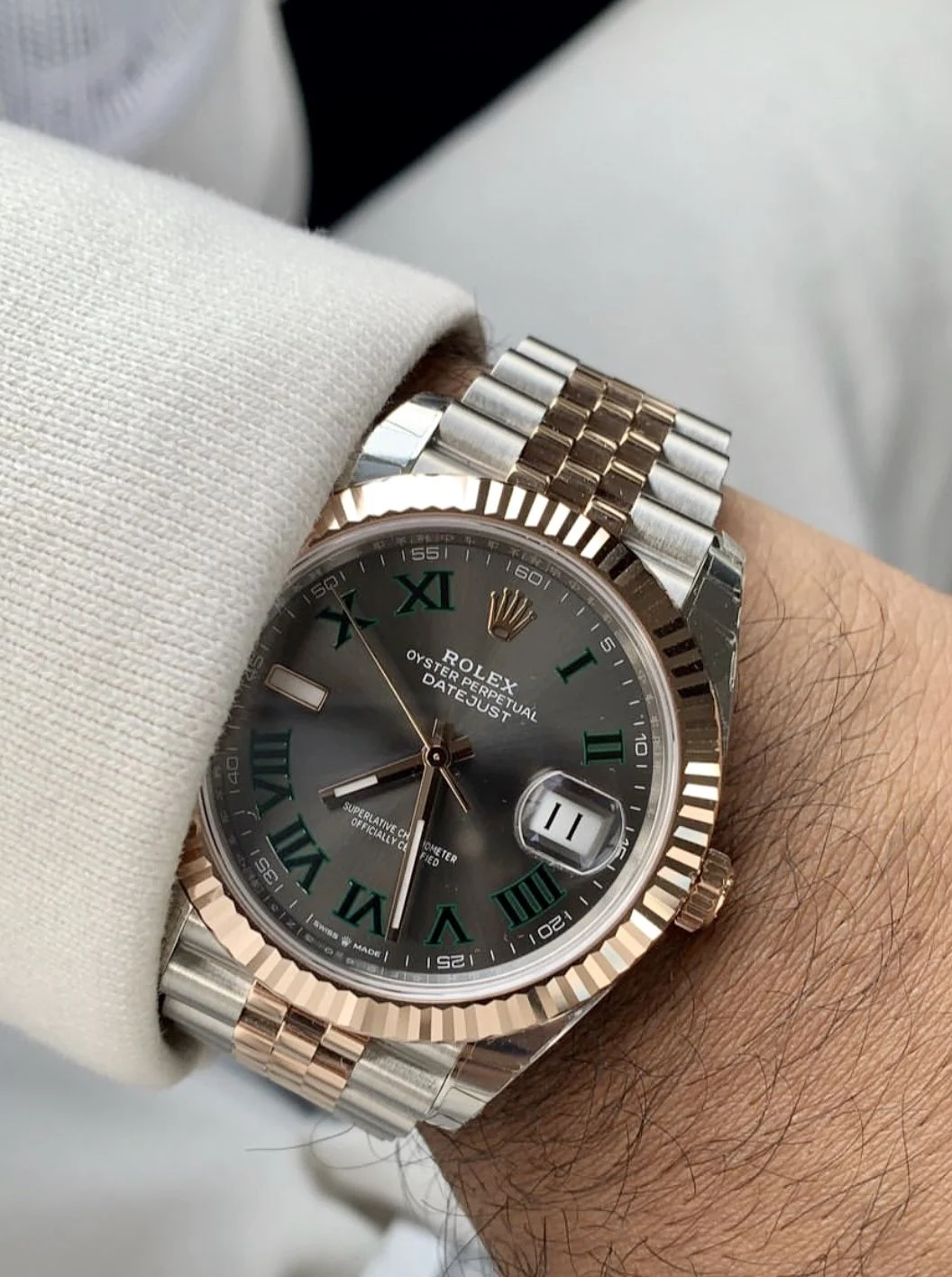
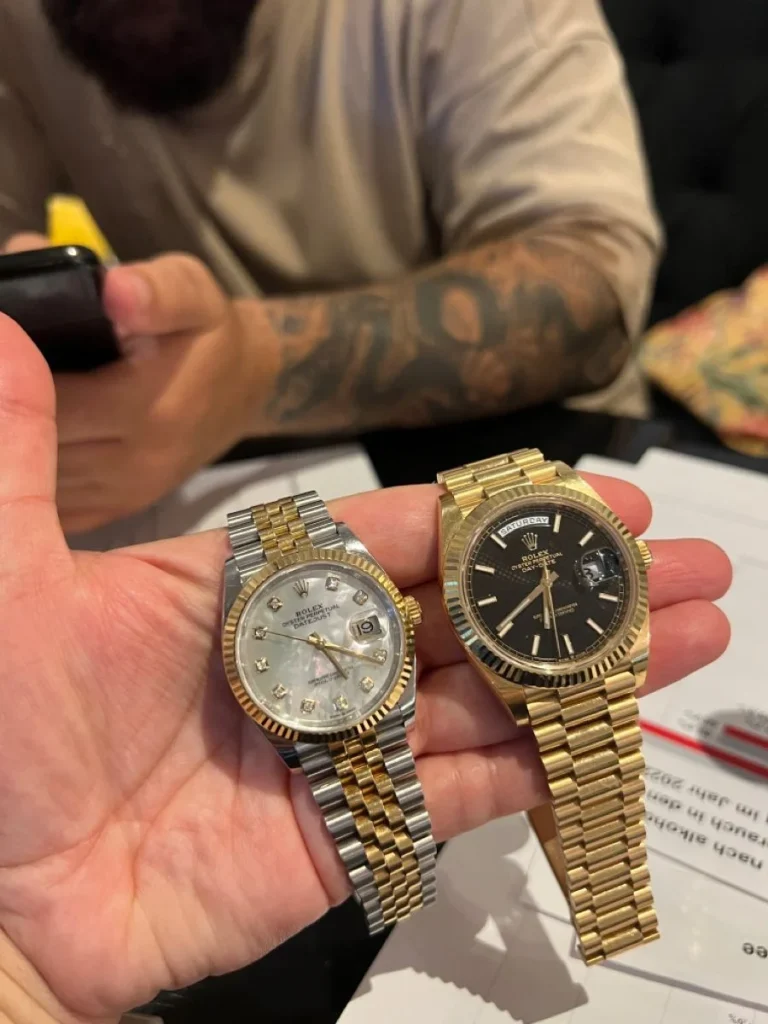
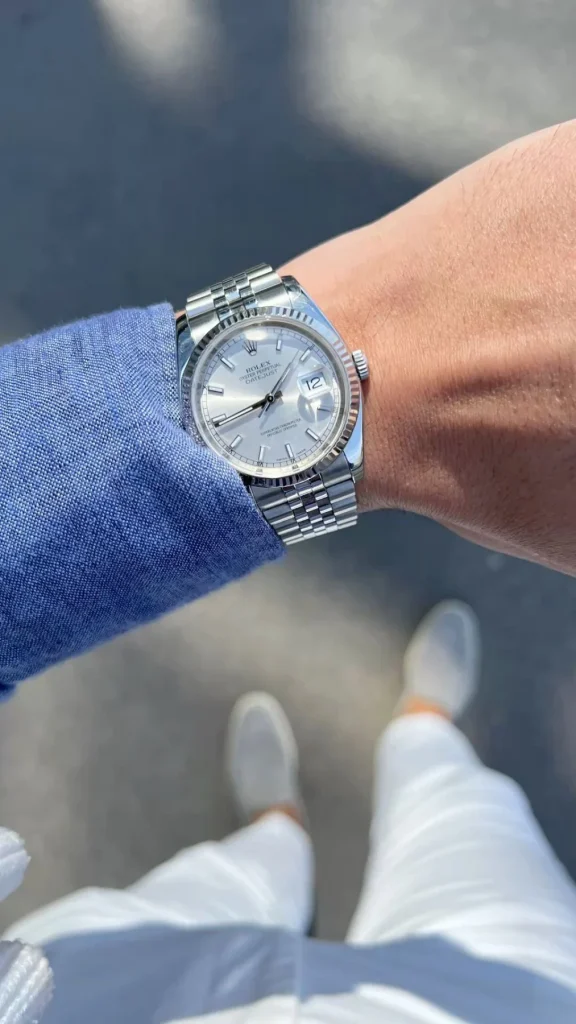
– **Datejust & Day-Date:** These are timeless, versatile dress watches. They hold value incredibly well (often 80-90% of retail) but rarely gain, except for rare dial colors (e.g., Stella dials) or exotic configurations. The **Day-Date 36 (ref. 118238)** is a strong holder.
– **Professional Models (Explorer I, Air-King, Milgauss, Yacht-Master):** The **Explorer I (ref. 124270)** is a robust performer, typically trading slightly below or at retail. The **Yacht-Master** in steel/gold (Rolesor) is a poor performer compared to its Submariner cousin.
– **Oyster Perpetual (36mm/41mm):** Excellent entry-level watch. Holds value well due to its base pricing, but appreciation is limited to rare dials (the “Tiffany” blue bubble was an outlier). The **OP 41 in green (ref. 124300)** saw strong gains.
### 4. The Toughest Market: Models That Depreciate
These are often the “overpriced at retail” segment in the secondary market.
– **Two-Tone (Rolesor) Models:** Gold and steel combinations (e.g., Submariner 116613LB) are less desirable to collectors. They often trade 20-30% below retail.
– **Full Gold Submariners (Yellow, White, Everose):** High retail cost, huge risk. A full gold “Bluesy” (116618LB) can lose $5k–$10k the moment you walk out of the AD.
– **Diamond-Set and Gem-Set Models:** Factory diamond dials are extremely hard to sell unless done by Rolex’s own gem-setting. Aftermarket diamonds kill value instantly.
– **Large Case Sizes (Deepsea 136660, Yacht-Master II 44mm):** These are niche watches. The Yacht-Master II regatta chronograph is notoriously difficult to resell due to its size and complexity.
### 5. Critical Factors That Kill Resale Value
– **Condition & Polishing:** A watch that has been over-polished loses sharp edges and detail. Original “unpolished” condition with patina is gold.
– **Box & Papers (Full Set):** A watch with its original box, papers, and warranty card can command 15–25% more than a “naked” (watch-only) piece.
– **Service History:** A recent Rolex service (with service papers) adds confidence. However, a watch that has been heavily serviced (replacement of bezel, dial, or crown) can lose collectible status.
– **Aftermarket Modifications:** Adding a non-Rolex strap, custom dial, or diamond bezel will **destroy** resale value among collectors.
### 6. Market Mechanics: The Gray Market vs. Retail – The “Appreciation Illusion”
The biggest trap for new buyers is confusing **"retail value"** with **"market value."**
– **At Retail (AD):** You pay MSRP. If you buy a steel Submariner for $9,100, you might sell it for $12,000 on the gray market. That is real appreciation.
– **On the Gray Market (Chrono24, Bob’s Watches, etc.):** You pay the market price. If you buy that same Submariner for $12,000, you might sell it for $11,500. You lost money. **Buying at market price locks in future depreciation** – you are paying for the hype
**Do All Rolex Watches Appreciate in Value?**
The short answer is **no**. While Rolex enjoys a reputation for exceptional value retention and is often associated with investment-grade timepieces, the vast majority of models do not consistently appreciate in the secondary market. Appreciation is the exception, not the rule, and is dependent on a confluence of scarcity, desirability, and market dynamics. This pillar […]
admin ·