**Topic Map**
1. **Introduction:** What is the Rolex Jubilee Bracelet? A Definition.
2. **The Historical Genesis:** Born for the 1945 Rolex Datejust.
3. **Design & Construction:**
– The Five-Piece Link Architecture
– Materials and Finish (Steel, Gold, Rolesor)
– The Oysterclasp vs. Crownclasp
4. **The Jubilee vs. The Oyster Bracelet: A Comparative Analysis.**
5. **Key Models Wearing the Jubilee Bracelet:**
– Rolex Datejust (The Original)
– Rolex Day-Date (The President of Bracelets)
– Rolex GMT-Master II (The “Pepsi” and “Batman”)
– Rolex Submariner (Historical & Datejust Variations)
6. **Comfort, Wearability, and Everyday Use.**
7. **Care, Maintenance, and Stretch (The “Jubilee Rattle”).**
8. **Investment and Collectibility: Why It Matters.**
9. **Conclusion: The Enduring Legacy of a Design Icon.**
—
### 1. Introduction: What is the Rolex Jubilee Bracelet?
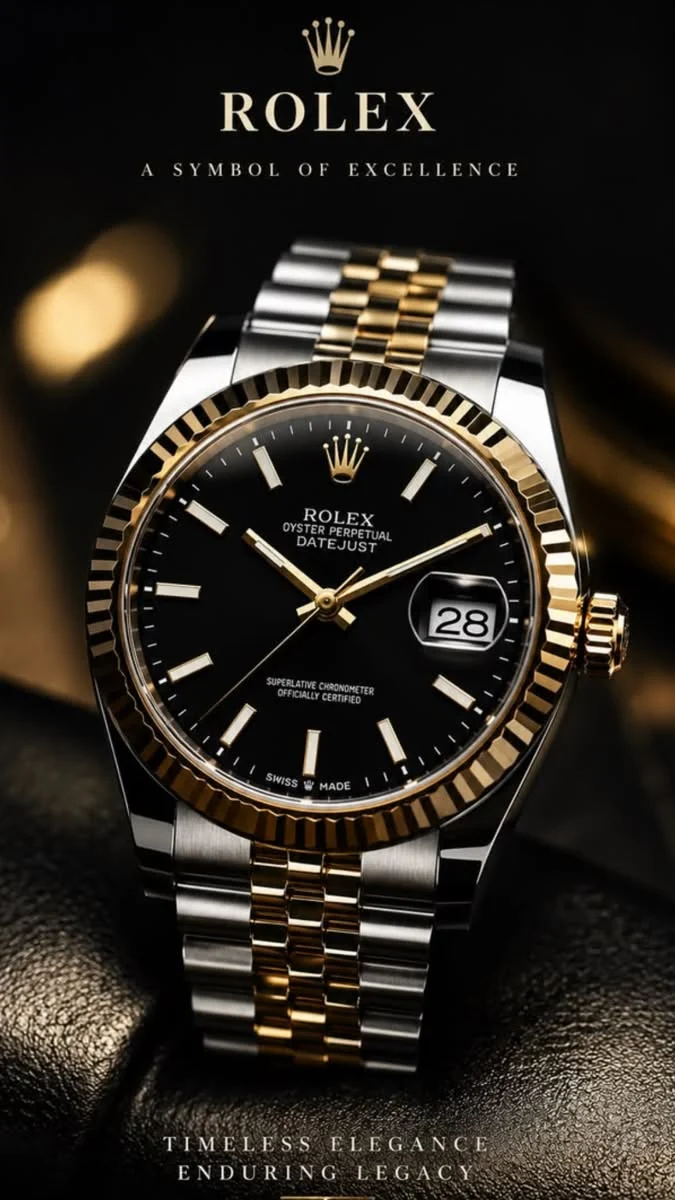
The **Rolex Jubilee bracelet** is a specific style of metal watch bracelet introduced by Rolex in 1945. It is immediately recognizable by its distinctive five-piece link design, which creates a supple, "fluted" appearance that is both dressy and exceptionally comfortable. Far more than just a strap, the Jubilee is a cornerstone of Rolex’s design language, originally created to commemorate the brand’s 40th anniversary (a "jubilee" celebration) and forever tied to the Rolex Datejust, the world’s first automatic wristwatch with a date window. For enthusiasts and collectors, the Jubilee represents elegance, heritage, and a specific type of vintage charm that the more common Oyster bracelet cannot replicate.
### 2. The Historical Genesis: Born for the 1945 Rolex Datejust
To understand the Jubilee, one must understand the Datejust. In 1945, Rolex unveiled the Ref. 4467 Datejust to celebrate its 40th anniversary. This watch was a monumental achievement: it featured a self-winding (automatic) movement and a date display that changed automatically at midnight. To match this technical innovation, Rolex needed a bracelet that was equally groundbreaking. The existing riveted Oyster bracelets were utilitarian and rugged. For a watch that was designed to be worn in boardrooms as well as on city streets, Rolex created the Jubilee. The name was a direct tribute to the anniversary milestone. Its five-piece link design—with three small, polished center links flanked by smaller, fluted links, and then wider satin-finished outer links—provided a visual texture that mirrored the fluted bezel of the Datejust itself, creating a perfectly harmonious design.
### 3. Design & Construction
#### The Five-Piece Link Architecture
The Jubilee’s signature is its **five-piece link arrangement**. From the center outwards, a link sequence looks like this: wide outer link (satin-brushed) → small inner link (polished) → center link (polished) → small inner link (polished) → wide outer link (satin-brushed). This complex interplay of brushed and polished surfaces catches light from every angle, giving the bracelet a jewelry-like, fluid quality. This construction makes the bracelet incredibly flexible and drape-like, conforming easily to the wrist.
#### Materials and Finish
The Jubilee is available in three main material configurations:
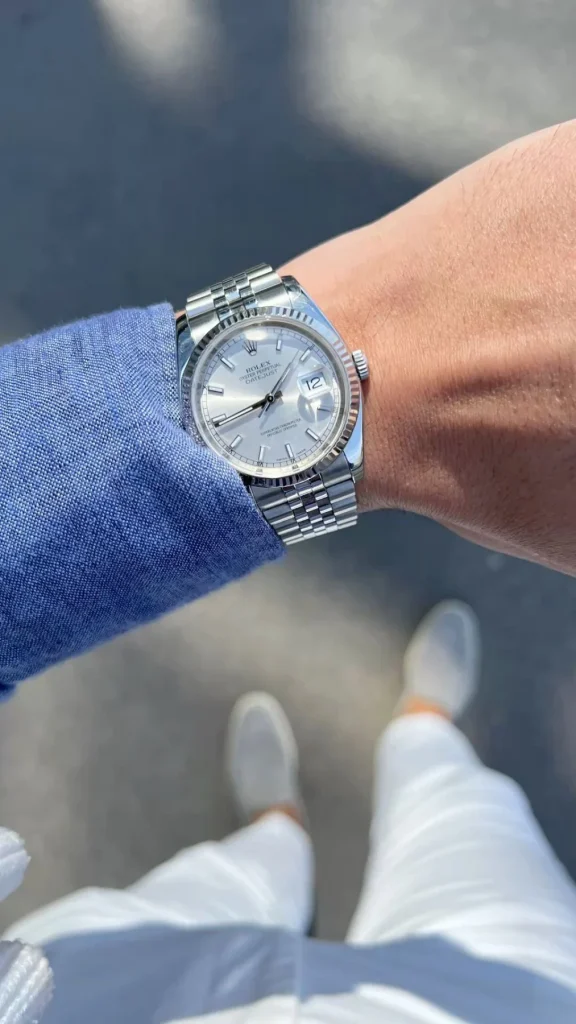
– **Stainless Steel (904L Oystersteel):** The most common and durable version. The contrasting polished and brushed surfaces create a high-end look without the cost of precious metal.
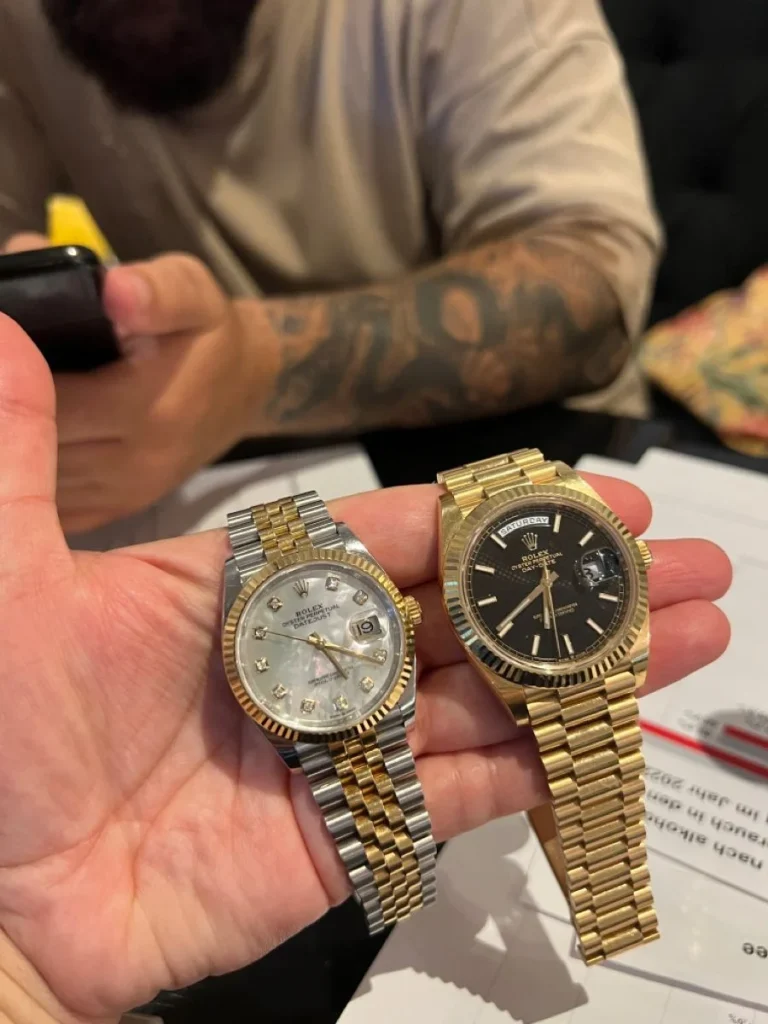
– **Two-Tone (Rolesor):** Rolex’s combination of steel and gold. Typically, the center links and small inner links are polished gold (yellow or Everose), while the outer links remain steel. This is the classic “Datejust” look.
– **Solid Gold (18k Yellow, White, or Everose):** The full-gold Jubilee is synonymous with the Day-Date (the “President” bracelet is actually a different, three-link design, but the full-gold Jubilee is also used on the Day-Date 36 and some Datejusts).
#### The Oysterclasp vs. Crownclasp
Older Jubilee bracelets from the mid-20th century used a **folding Crownclasp** (a hidden clasp that sits flush inside the bracelet’s links). This was elegant but less secure. Modern Jubilee bracelets (post-2000s) use the **Oysterclasp** with the **Easylink comfort extension link**. This is a stamped clasp with a secure push-button release, featuring a 5mm micro-adjustment system. The Oysterclasp is bulkier but far more practical for daily wear.
### 4. The Jubilee vs. The Oyster Bracelet
The two primary Rolex bracelets serve different purposes:
| Feature | Jubilee Bracelet | Oyster Bracelet |
| :— | :— | :— |
| **Link Design** | Five-piece (3 polished, 2 brushed) | Three-piece (flat center, brushed sides) |
| **Style** | Dressy, elegant, vintage-tone | Sporty, robust, tool-like |
| **Comfort** | Extremely flexible, drapes over wrist | More rigid, secure, "solid" feel |
| **Durability** | Prone to stretch over time (vintage) | Much more resistant to stretching |
| **Size** | Smaller, lighter links | Larger, heavier, more substantial |
| **Best For** | Datejust, Day-Date, GMT-Master II | Submariner, Explorer, Daytona, Sea-Dweller |
**Internal Link Opportunity:**
[Link to: “The Complete Guide to the Rolex Oyster Bracelet”]
Choosing between them often boils down to intended use: The Jubilee for elegance and comfort; the Oyster for ruggedness and sports-watch heritage.
### 5. Key Models Wearing the Jubilee Bracelet
#### Rolex Datejust (The Original)
This is the Jubilee’s natural habitat. From the 36mm Datejust to the modern 41mm (Ref. 126334), the Jubilee is the standard bracelet. The fluted bezel on a Datejust with a Jubilee is the most iconic Rolex configuration ever created.
#### Rolex Day-Date (The President of Bracelets)
While the Day-Date is famous for the three-link **President bracelet**, many older and some modern Day-Date 36 models came on the Jubilee. A Day-Date on a solid gold Jubilee is a rare, ultra-elegant variant.
#### Rolex GMT-Master II (The “Pepsi” and “Batman”)
In 2018, Rolex reissued the GMT-Master II reference 126710 with a Jubilee bracelet, reviving the look of the 1955 “Pepsi” GMT. This was a massive shock that turned a tool watch into a stylish travel piece. The Jubilee’s dressy character perfectly offsets the GMT’s sporty ceramic bezel. This configuration is now one of the most sought-after steel sports watches.
**Internal Link Opportunity:**
[Link to: “Rolex GMT-Master II ‘Pepsi’ vs ‘Batman’ – A Collector’s Guide”]
#### Rolex Submariner (Historical & Datejust Variations)
It is rare but true: a small number of vintage Rolex Submariners (Ref. 1680/8) were sold on Jubilee bracelets, often as special orders or for the Middle Eastern market. These are now highly collectible anomalies.
### 6. Comfort, Wearability, and Everyday Use
The Jubilee is widely considered one of the most comfortable metal bracelets ever made. Its flexibility allows it to conform to the wrist without pinching hair or feeling rigid. The small links distribute the weight of the watch head evenly. However, because the links are small and polished, the bracelet can feel less secure on very heavy watches (like a Sea-Dweller). For daily use on a Datejust or GMT, it is superb. The modern Easylink clasp further enhances comfort by allowing quick adjustment for hot or cold weather.
### 7. Care, Maintenance, and Stretch (The “Jubilee Rattle”)
**The dreaded “Jubilee Stretch”** is the bracelet’s most famous vulnerability. Over decades, the small hollow pins and internal collars that connect the links can wear down, causing the bracelet to “stretch” – gaps appear between the links. This is cosmetic and does not mean the bracelet will break, but it can loosen the feel.
– **Vintage Stretch:** Very common on vintage Prince and Jubilee bracelets (pre-1990s).
– **Modern Solution:** Modern solid-link Jubilee bracelets (post-2006) are far more robust and resistant to stretching. They do rattle slightly as the links move against each other—this is normal.
– **Maintenance Tips:** Soak in lukewarm soapy water, scrub gently with a soft toothbrush, rinse, and dry. Avoid ultrasonic cleaners for vintage bracelets
The Ultimate Guide to the Rolex Jubilee Bracelet: History, Design, and Iconic Models
**Topic Map** 1. **Introduction:** What is the Rolex Jubilee Bracelet? A Definition. 2. **The Historical Genesis:** Born for the 1945 Rolex Datejust. 3. **Design & Construction:** – The Five-Piece Link Architecture – Materials and Finish (Steel, Gold, Rolesor) – The Oysterclasp vs. Crownclasp 4. **The Jubilee vs. The Oyster Bracelet: A Comparative Analysis.** 5. **Key […]
admin ·