# Can a Rolex Rust? The Complete Guide to Water Resistance, Corrosion, and Care
## Topic Map: What You’ll Learn in This Pillar Page
1. **The Short Answer: Can a Rolex Rust?** – A definitive yes or no based on material science.
2. **How Rolex Prevents Rust** – The metals, seals, and engineering that resist corrosion.
3. **The Role of Water Resistance** – Understanding Oyster cases, gaskets, and pressure ratings.
4. **Common Scenarios Where Rust Can Occur** – When, where, and why corrosion happens.
5. **Identifying Rust vs. Tarnish vs. Dirt** – Visual cues to distinguish real damage.
6. **Rolex Models Most and Least Susceptible to Rust** – Material-specific vulnerabilities.
7. **Preventive Maintenance** – Daily habits, cleaning, and servicing schedules.
8. **What to Do If Your Rolex Gets Wet or Shows Rust** – Immediate steps and professional repair options.
9. **Expert Myths Debunked** – Separating fact from fiction about Rolex and water.
10. **Conclusion – Proactive Care for a Lifetime** – Summary of key takeaways.
—
## 1. The Short Answer: Can a Rolex Rust?
**Yes, a Rolex can rust—but only under specific conditions.** Modern Rolex watches are built from high-grade **904L stainless steel** (branded “Oystersteel”), which contains molybdenum and chromium to resist corrosion far better than standard 316L steel. However, rust is not impossible. The crown, pushers, and case back use gaskets that can degrade over time; the movement inside contains steel components; and even the 904L steel can pit if exposed to saltwater or acidic substances without proper maintenance. The critical factor is **how the watch is used, sealed, and cared for.**
—
## 2. How Rolex Prevents Rust
Rolex employs a multi-layered defense against corrosion:
– **Material Science:** 904L steel is 20–30% more resistant to pitting and crevice corrosion than 316L steel. It contains 4–5% molybdenum and 19–21% chromium, which form a passive oxide layer.
– **Oyster Case Design:** A screw-down crown, threaded case back, and sapphire crystal create a hermetic seal when properly closed.
– **Sealing Components:** Synthetic rubber gaskets at the crown, case back, and crystal prevent moisture ingress. Rolex recommends replacing these every service (typically 5–10 years).
– **Movement Protection:** Interior steel parts are lubricated with specialized oils that repel water and inhibit oxidation. The automatic rotor and bridges are often plated with rhodium or treated with anti-corrosive coatings.
—
## 3. The Role of Water Resistance
Water resistance is not permanent—it depends on seal integrity. Key numbers:
– **30–100 meters:** Most modern Rolex models (e.g., Datejust, Submariner) are rated for swimming and snorkeling.
– **Helium Escape Valve (Sea-Dweller, Deepsea):** Allows gas to vent during saturation diving, preventing crystal blow-off.
– **Dynamic vs. Static:** Washing hands (low pressure) is different from swimming (higher pressure). Hot water (e.g., shower) can break down gaskets faster.
– **Aging:** Over time, gaskets dry out, shrink, or crack. A 20-year-old Rolex that hasn’t been serviced may have **zero water resistance**.
—
## 4. Common Scenarios Where Rust Can Occur
– **Saltwater exposure:** After a swim in the ocean, salt crystals can form in crevices, accelerating corrosion if not rinsed off.
– **Sweat and humidity:** Extended wear in hot, tropical climates can cause moisture buildup under the bezel or crystal.
– **Failed gaskets:** A loose crown or cracked case back gasket is the #1 entry point for water.
– **Chemical contact:** Perfume, chlorinated water, or cleaning agents can degrade seals or attack the steel.
– **Older models:** Vintage Rolex watches (pre-1990s) may use 316L steel, which is more prone to rust than Oystersteel.
—
## 5. Identifying Rust vs. Tarnish vs. Dirt
It’s easy to misdiagnose discoloration. Here’s how to tell them apart:
– **Rust:** Reddish-brown flakes, raised spots, or pitting on steel. Usually feels rough.
– **Tarnish:** A dull, dark film on gold or silver elements (e.g., cyclops, bezel). Polishes off easily.
– **Dirt / Patina:** Greasy buildup on bracelet links or under the crystal. Wipes away with a soft cloth.
– **Fake rust:** Sometimes dirt or dried grease from a leaky gasket mimics rust. Use a loupe to inspect.
**Quick test:** If it scratches off with a soft toothbrush and mild soap, it’s likely dirt. If it remains after gentle cleaning, it could be rust or corrosion.
—
## 6. Rolex Models Most and Least Susceptible to Rust
– **Most resistant:** Submariner, Sea-Dweller, Deepsea – fully 904L steel, heavy gaskets, and a crown that screws down tight.
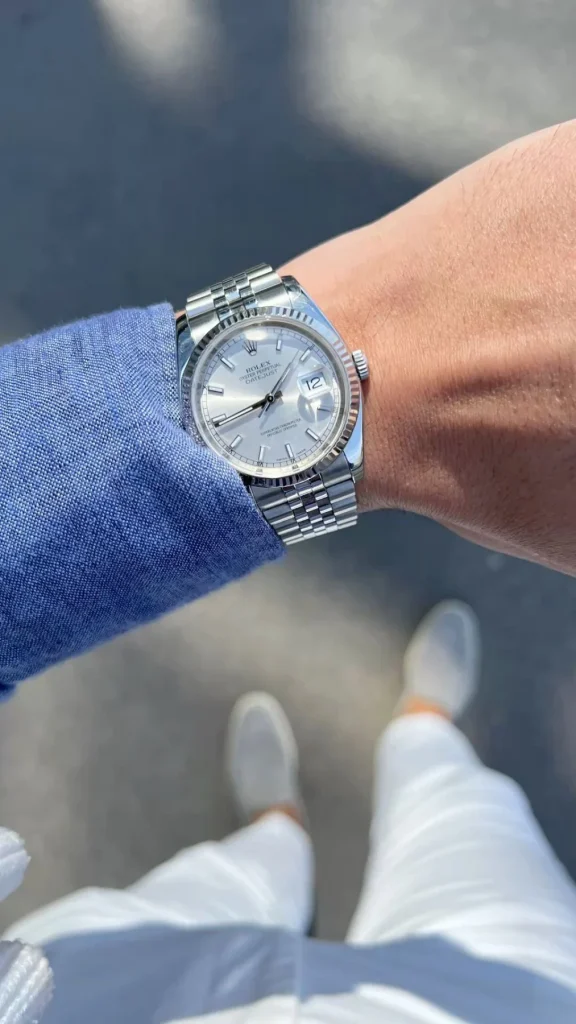
– **Moderately resistant:** Datejust, Day-Date, Explorer – sealed but not designed for deep diving.
– **Least resistant:** Vintage models (pre-1970), Cellini (dress watches with lesser water resistance), and any watch with a **transparent case back** (which uses a mineral or sapphire window that can leak if the seal fails).
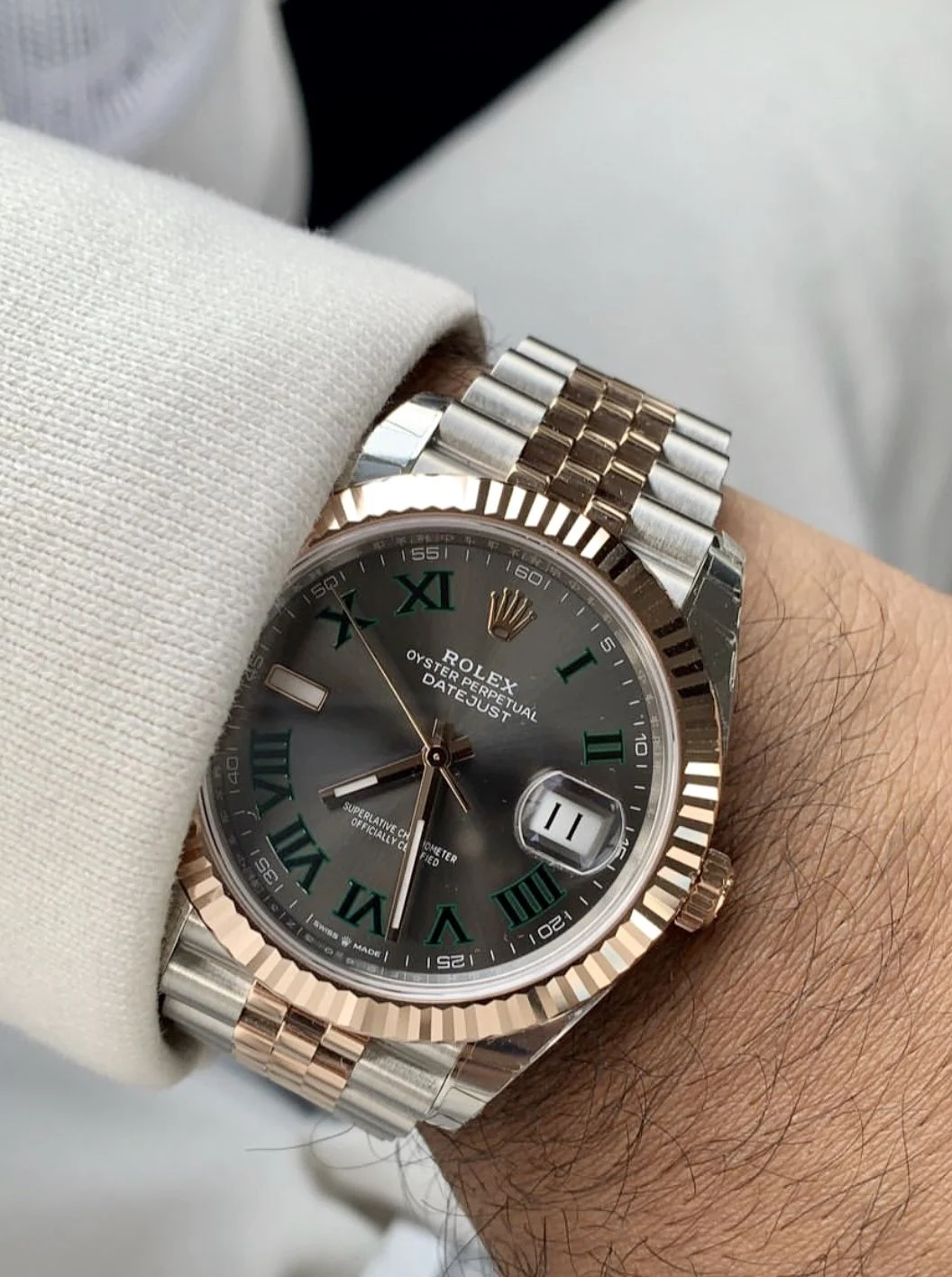
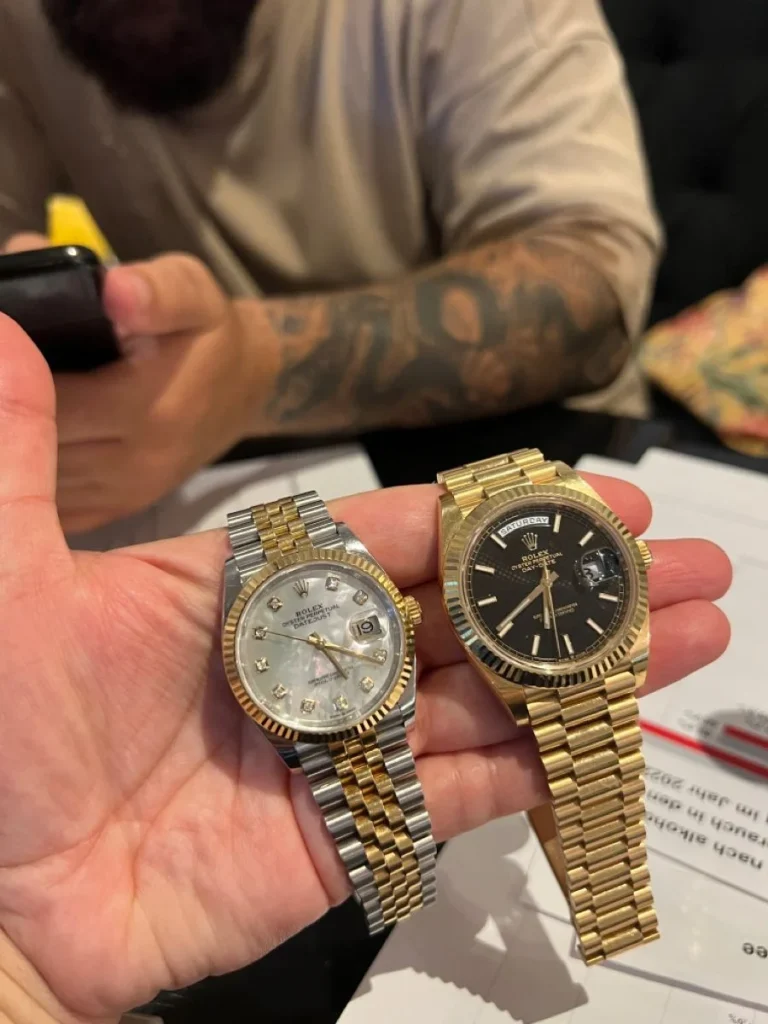
– **Gold and two-tone models:** The gold parts (e.g., bezel, crown) are non-corrosive, but the gold-plated steel clasp can corrode at the junction if moisture gets trapped.
—
## 7. Preventive Maintenance
To keep your Rolex rust-free, follow this regimen:
### Daily & After Water Exposure
– Rinse fresh water over the watch after saltwater or pool exposure.
– Dry thoroughly with a microfibre cloth (including the crown and bracelet crevices).
– Avoid pressing the crown or pushers while underwater.
### Annual
– Inspect gaskets visually (cracked or hardened rubber = replace).
– Test water resistance at a certified service center (costs ~$50–100).
– Clean the bracelet with a soft brush and mild soap to remove sweat and salt.
### Every 5–10 Years
– Full service by Rolex or an authorized watchmaker: gaskets replaced, movement cleaned and oiled, case pressure-tested.
– Do not attempt to open the case yourself – you risk breaking the seal permanently.
—
## 8. What to Do If Your Rolex Gets Wet or Shows Rust
**Immediate action (if the watch is not running or has visible moisture):**
1. **Do not operate the crown or pushers** – this can push water deeper into the movement.
2. **Remove the watch from your wrist** – body heat may accelerate condensation.
3. **Dry the exterior** with a lint-free cloth.
4. **Place in a sealed container with silica gel** (or uncooked rice) for 24–48 hours to absorb internal moisture.
5. **Take it to an authorized service center** immediately – even if it dries out, residue can cause corrosion later.
**If you see rust spots on the steel:**
– Light surface rust: A jeweler may polish it off with cerium oxide or fine-grit paper.
– Deep pitting: Requires part replacement (e.g., a crown tube or bracelet link).
– Do not use household rust removers (e.g., CLR or vinegar) – they will damage the finish and seals.
**If the movement itself rusts:**
– Professional disassembly, replacement of rusted components (gears, springs), and re-oiling. Expect a bill of $500–$2,000+ depending on damage.
—
## 9. Expert Myths Debunked
– **Myth: “Rolex steel never rusts.”** False. 904L is highly resistant, not immune. Salt and neglect can still cause pitting.
– **Myth: “A Rolex can be worn in the shower every day.”** Not recommended. Hot water and soap degrade gaskets faster than cold water.
– **Myth: “If the crown is screwed down, it’s 100% waterproof.”** Only if gaskets are in perfect condition. A 30-year-old watch with original seals is not safe.
– **Myth: “A new Rolex from an AD never needs a service for 10 years.”** Rolex’s own recommendation is 10 years, but water resistance may fail earlier if the watch is exposed to frequent swimming, sauna, or chemicals.
– **Myth: “Rust can be reversed by WD-40.”** Never – WD-40 is a solvent that will strip lubrication from the movement and degrade seals.
—
## 10. Conclusion – Proactive Care for a Lifetime
A Rolex is a marvel of corrosion-resistant engineering, but it is not invincible. **Yes, a Rolex can rust** – but with routine gasket replacement, regular pressure testing, and mindful cleaning, you can prevent it entirely. The key is understanding that water resistance is
Can a Rolex Rust? The Complete Guide to Water Resistance, Corrosion, and Care
# Can a Rolex Rust? The Complete Guide to Water Resistance, Corrosion, and Care ## Topic Map: What You’ll Learn in This Pillar Page 1. **The Short Answer: Can a Rolex Rust?** – A definitive yes or no based on material science. 2. **How Rolex Prevents Rust** – The metals, seals, and engineering that resist […]
admin ·