**Topic Map (Table of Contents)**
1. Introduction: The Great Rolex Market Correction
2. What Sparked the Panic? The Perfect Storm of Factors
3. The Hardest-Hit Models: Which Watches Are Dropping Fastest?
4. Secondary Market Price Data: Real Numbers vs. Hype
5. The Role of Supply: Rolex’s Factory Expansion & Its Impact
6. The Role of Demand: Luxury Fatigue vs. Pent-Up Supply
7. Is This a Crash or a Healthy Correction? Expert Analysis
8. How to Navigate the Market Now: Buyer’s vs. Seller’s Tips
9. Future Outlook: Where Are Rolex Prices Headed in 2025?
10. Conclusion: Timing the Market vs. Wearing the Watch
—
### 1. Introduction: The Great Rolex Market Correction
If you follow luxury watches, you’ve likely seen the headlines: “Rolex prices crashing,” “Secondary market in freefall,” “Steel Daytona drops below $20,000.” The buzz is real, but the reality is more nuanced. From mid-2022 through late 2024, many popular Rolex models—particularly stainless steel sports watches—have experienced significant price declines of 20% to 40% from their speculative peaks in early 2022. This guide provides a comprehensive, data-driven analysis of the current state of Rolex pricing, separating market noise from genuine trends, and offering actionable insights for both buyers and sellers.
### 2. What Sparked the Panic? The Perfect Storm of Factors
Several converging forces drove the downward trend:
– **Interest Rate Hikes (2022-2023):** The Federal Reserve’s aggressive rate increases made “cheap money” for luxury purchases scarce and increased the opportunity cost of tying up capital in watches.
– **Cryptocurrency & Stimulus Wealth Erosion:** The 2022 crypto crash and the end of pandemic-era stimulus checks reduced the number of newly wealthy speculators.
– **Inventory Glut:** Flippers and resellers, caught holding excess stock, began discounting to free up cash, creating a downward price spiral.
– **Rolex’s Own Moves (C.P.O. Program):** Rolex’s launch of its Certified Pre-Owned (C.P.O.) program, while limited, signaled a push to formalize the secondary market, indirectly pressuring independent dealers.
– **Economic Uncertainty:** Layoffs in finance and tech sectors, combined with global inflation, have cooled demand for $15,000+ watches.
### 3. The Hardest-Hit Models: Which Watches Are Dropping Fastest?
Not all Rolexes are created equal in this downturn. The correction is concentrated in “hype” models:
– **Rolex Daytona (Steel, Ceramic Bezel):** The icon of the bubble. A 116500LN (black dial) once trading above $35,000 pre-owned now frequently sells in the **$18,000–$22,000 range**—still above retail ($14,800), but a massive drop.
– **Rolex GMT-Master II “Pepsi” & “Batgirl” (Steel):** Prices for the 126710BLRO/BLNR have fallen from highs of $25,000+ to roughly **$16,000–$19,000**.
– **Rolex Submariner (no-date & date):** The 124060 (no-date) now trades closer to **$11,000–$13,000** (retail: ~$9,100). The decline is gentler but still notable.
– **Rolex Explorer I (124270):** A rare case of resilience. Pricing has only slipped slightly, often staying within **$7,500–$8,500** (retail: ~$6,600), likely because it was less over-inflated to begin with.
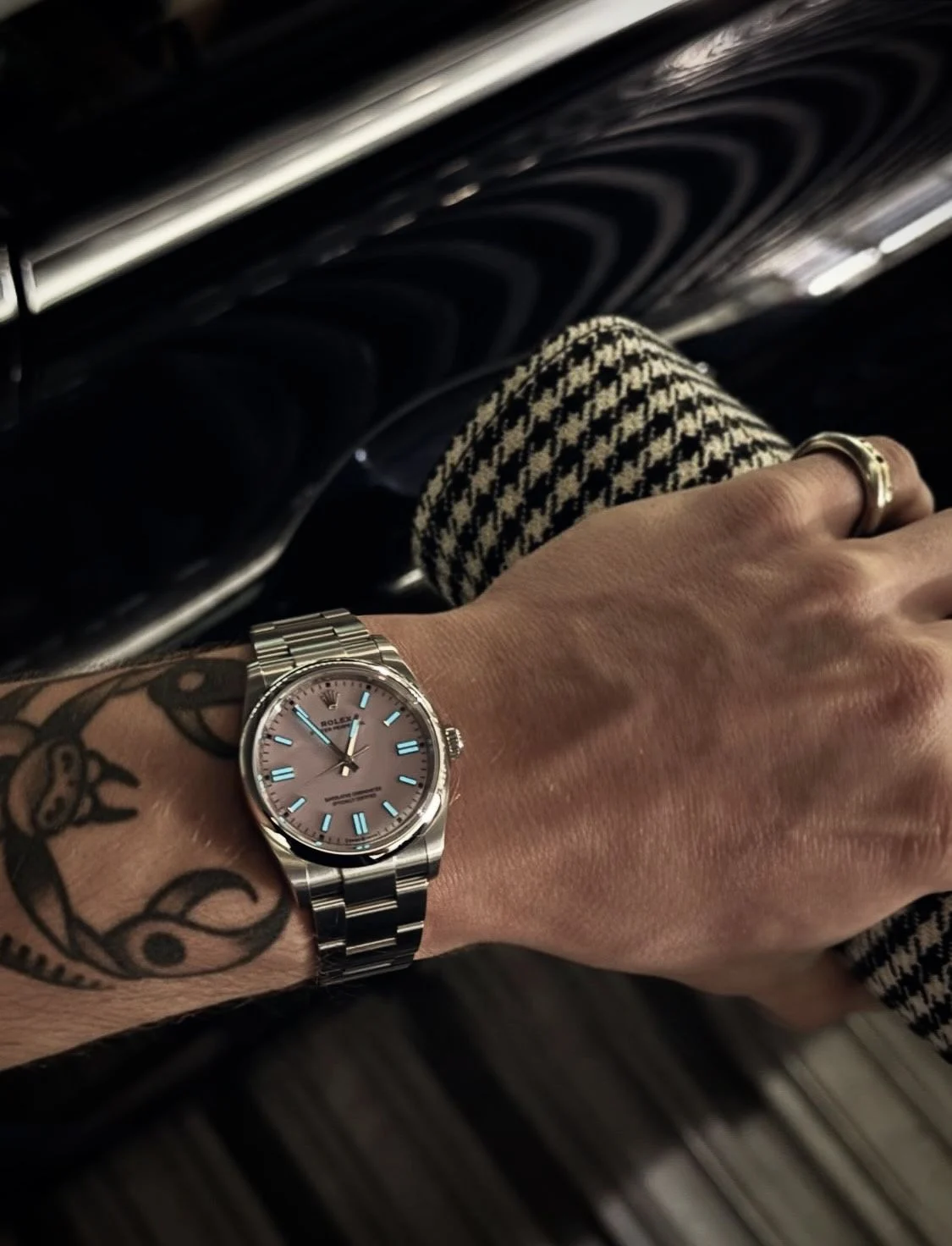
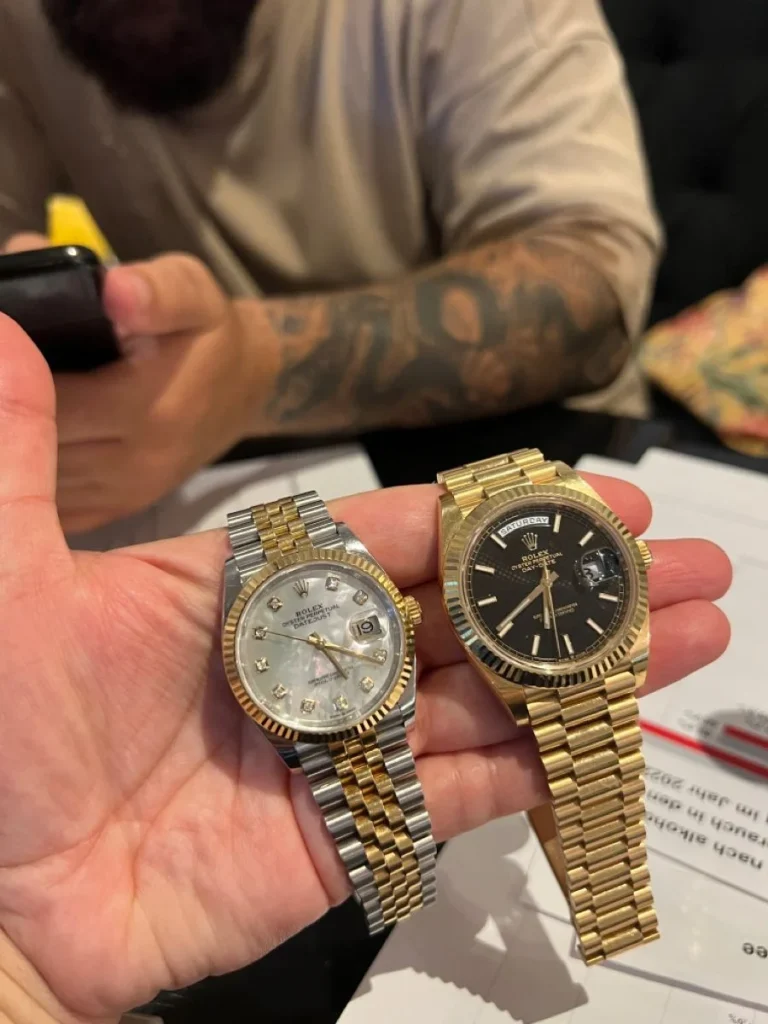
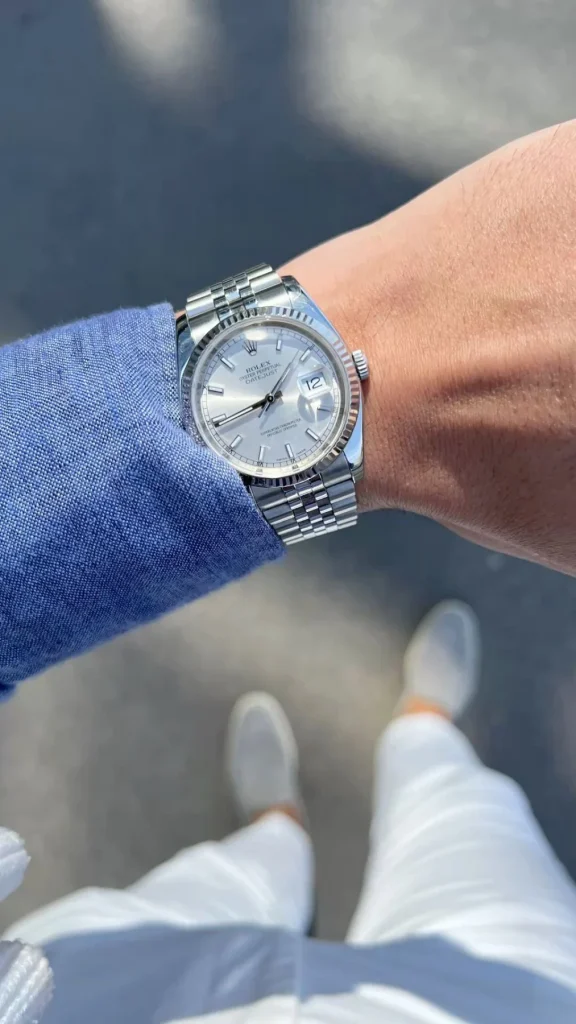
*Key Insight:* Models that never had a waitlist (e.g., Two-Tone Datejust, Cellini, most 34mm Oyster Perpetuals) have seen **minimal movement**—these are not crashing because they were never inflated.
### 4. Secondary Market Price Data: Real Numbers vs. Hype
To avoid sensationalism, let’s look at aggregate data from platforms like WatchCharts, Chrono24, and WatchBox:
– **Overall Market:** The “Rolex Index” (tracking the average price of 20 popular models) peaked in March 2022, fell sharply through 2023, and has now **stabilized near 2021 levels**—roughly 30% below the peak.
– **Monthly Change (Nov-Dec 2024):** Prices have flattened. The rapid 5-10% monthly drops of late 2022 are over.
– **Transaction Volume:** Dealers report slower turnover, but watches that are realistically priced ($10k–$20k sport models) still sell within weeks, not days.
**Verdict:** The “crash” is best described as a **rapid deflation of a speculative bubble**, not a collapse to retail values. The floor appears near 2021–2022 retail-plus margins.
### 5. The Role of Supply: Rolex’s Factory Expansion & Its Impact
Rolex announced a major CHF 1 billion+ factory in Bulle, Switzerland, which began production in 2023–2024. This will increase annual output by an estimated **25-30%** over several years.
– **Immediate Effect:** Psychological. The market believed scarcity would persist. News of more supply led to a revaluation of “premiums” for steel watches.
– **Long-Term Effect:** Greater availability at authorized dealers (ADs) is slowly reducing the “gray market premium.” For models like the Submariner, walk-in purchases are now possible, killing the flip incentive.
– **Caveat:** Increased production does not mean everyone will get a Daytona. Rolex will still manage allocation. It does, however, reduce the desperation that drove sky-high gray prices.
### 6. The Role of Demand: Luxury Fatigue vs. Pent-Up Supply
Demand for Rolex remains **extremely high** compared to most other luxury brands (e.g., Audemars Piguet, Patek Philippe have seen sharper drops). However:
– **Shift in Buyer Psychology:** The “fear of missing out” (FOMO) has switched to a “wait and see” approach. Buyers now believe prices will dip further, suppressing urgency.
– **Aspirational vs. Speculative Buyers:** The core customer who wants to *wear* the watch is still active. The speculator, who bought 10 watches to flip, has largely exited.
– **Global Markets:** Demand from China—a key driver of the 2019–2021 boom—has cooled significantly due to economic slowdown and anti-corruption campaigns. This removal of a massive buyer pool helped deflate the top of the market.
### 7. Is This a Crash or a Healthy Correction? Expert Analysis
– **Crash Argument:** If you bought a steel Paul Newman Daytona at $80,000 in early 2022 and it is now worth $60,000, that is a 25% loss—painful. For highly leveraged flippers, it was a crash.
– **Correction Argument:** Prices are still **above retail for virtually all steel sport models**. A “crash” would mean Rolexes selling for 30% below MSRP, which is not happening. What we see is a return to a more rational, premium-driven market where supply and demand are closer to balance.
**Expert consensus:** This is a healthy market correction that has flushed out speculators. For the end-user, the environment is now more favorable than it has been in three years.
### 8. How to Navigate the Market Now: Buyer’s vs. Seller’s Tips
**For Buyers (Best Time in Years):**
– **Target “Pandemic Spike” Models:** Focus on steel Daytonas and GMTs. Prices have fallen the most, but the floor is near. Waiting 6 months may save 5%, but you might not get the exact model you want.
– **Leverage Negotiation:** Dealers are more willing to accept offers, especially on full sets (box, papers, and completed warranty cards). Aim for 5-10% off the listed price.
– **Consider Used vs. New:** Pre-owned watches from the 2010s (e.g., 116610 Submariner) are now extremely good value, often $2,000–$3,000 less than the current generation.
– **Internal Link Opportunity:** “How to Authenticate a Rolex Before You Buy.”
**For Sellers (Hold the line?):**
– **Don’t Panic Sell:** The steepest drops are likely over. If you don’t need cash urgently, waiting until late 2025 may yield a small recovery.
– **Focus on Rarity:** Turquoise (Tiffany) dials, rainbow stone bezels, or vintage models have held value better. Steel models are the hardest to sell.
– **Sell to Private Parties:** Dealer trade-in offers are low (they need to cover their risk). Selling on forums like Rolex Forums or Reddit’s r/WatchExchange can net 10-15% more.
– **Internal Link Opportunity:** “How to Sell a Rolex:
Are Rolex Prices Crashing? A Definitive Guide to the 2024-2025 Market Shift
**Topic Map (Table of Contents)** 1. Introduction: The Great Rolex Market Correction 2. What Sparked the Panic? The Perfect Storm of Factors 3. The Hardest-Hit Models: Which Watches Are Dropping Fastest? 4. Secondary Market Price Data: Real Numbers vs. Hype 5. The Role of Supply: Rolex’s Factory Expansion & Its Impact 6. The Role of […]
admin ·