**Table of Contents (Topic Map)**
1. **The Short Answer: No, They Are Separate Companies**
2. **History and Founding: Two Different Origins**
3. **Ownership Structures: Swatch Group vs. the Hans Wilsdorf Foundation**
4. **Brand Positioning: Precision vs. Prestige**
5. **Manufacturing and Movements: In-House Capabilities Compared**
6. **Iconic Models: Speedmaster vs. Submariner, Seamaster vs. Datejust**
7. **Pricing and Resale Value: Investment Potential**
8. **Innovation and Technology: Co-Axial vs. Parachrom**
9. **Cultural Impact: Space, Cinema, and Sports**
10. **Counterfeiting and Authentication: How to Spot the Difference**
11. **Which One Should You Choose? A Buying Guide**
12. **Conclusion: Rivals, Not Relatives**
—
### 1. The Short Answer: No, They Are Separate Companies
Omega and Rolex are not the same company. They are fierce competitors in the luxury Swiss watch market, each with distinct brand identities, ownership structures, and histories. While both produce high-quality timepieces that command respect, they operate independently—Omega under the Swatch Group and Rolex under the Hans Wilsdorf Foundation. Understanding this distinction is the first step to appreciating what each brand offers.
### 2. History and Founding: Two Different Origins
– **Rolex** was founded in 1905 by Hans Wilsdorf in London, later moving to Geneva, Switzerland. Its early focus was on precision and wristwatch development, famously earning the world’s first chronometer certification for a wristwatch in 1910.
– **Omega** traces its roots to 1848, when Louis Brandt began assembling pocket watches in La Chaux-de-Fonds. The brand officially adopted the “Omega” name in 1903. Its history includes serving as the official timekeeper for the Olympic Games since 1932.
*Contrast:* Omega is older by nearly 60 years; Rolex pioneered modern wristwatch conventions.
### 3. Ownership Structures: Swatch Group vs. the Hans Wilsdorf Foundation
– **Omega** is a wholly owned subsidiary of the **Swatch Group**, a publicly traded conglomerate (majority owned by the founding Hayek family) that also owns Breguet, Longines, and Tissot. This gives Omega access to group-level movement R&D.
– **Rolex** is owned by the **Hans Wilsdorf Foundation**, a non-profit trust established in 1945. Rolex does not pay corporate taxes in Switzerland because all profits are reinvested into the brand or donated to charitable causes. This private ownership allows Rolex to focus on long-term stability rather than quarterly shareholder demands.
*Internal Link Opportunity:* See Section 5 for how ownership impacts manufacturing decisions.
### 4. Brand Positioning: Precision vs. Prestige
| Aspect | Omega | Rolex |
|——–|——-|——-|
| Target Audience | Tool-watch enthusiasts, collectors, adventurers | Affluent professionals, status seekers, investors |
| Marketing Slogan | “Precision, Heritage, Innovation” | “A Crown for Every Achievement” |
| Vibe | Achievements in space and sea | Symbol of success, unchanged heritage |
| Perceived Level | High-luxury, approachable | Ultra-luxury, aspirational |
Both are luxury brands, but Rolex sits at a higher tier in terms of exclusivity and resale value, while Omega is often seen as the more “accessible” high-end choice.
### 5. Manufacturing and Movements: In-House Capabilities Compared
– **Omega** manufactures its movements in-house within the Swatch Group’s ETA and Valjoux facilities. Its signature innovation is the **Co-Axial escapement**, designed by George Daniels, which reduces friction for longer service intervals.
– **Rolex** produces all movements in-house at its own factories, such as those in Bienne. Its hallmark technologies include the **Parachrom hairspring** and **Chronergy escapement**, both known for anti-magnetism and robustness.
*Internal Link Opportunity:* Compare key model movements in Section 6.
### 6. Iconic Models: Speedmaster vs. Submariner, Seamaster vs. Datejust
– **Omega Speedmaster** – The “Moonwatch,” chosen by NASA for all six lunar landings. Manual wound, chronograph function, iconic hesalite crystal.
– **Rolex Submariner** – The classic dive watch, water-resistant to 300m (since 1953). Unidirectional bezel, Cerachrom ceramic insert, automatic movement.
– **Omega Seamaster** – James Bond’s watch since 1995. Helium escape valve, wave dial, exhibition caseback.
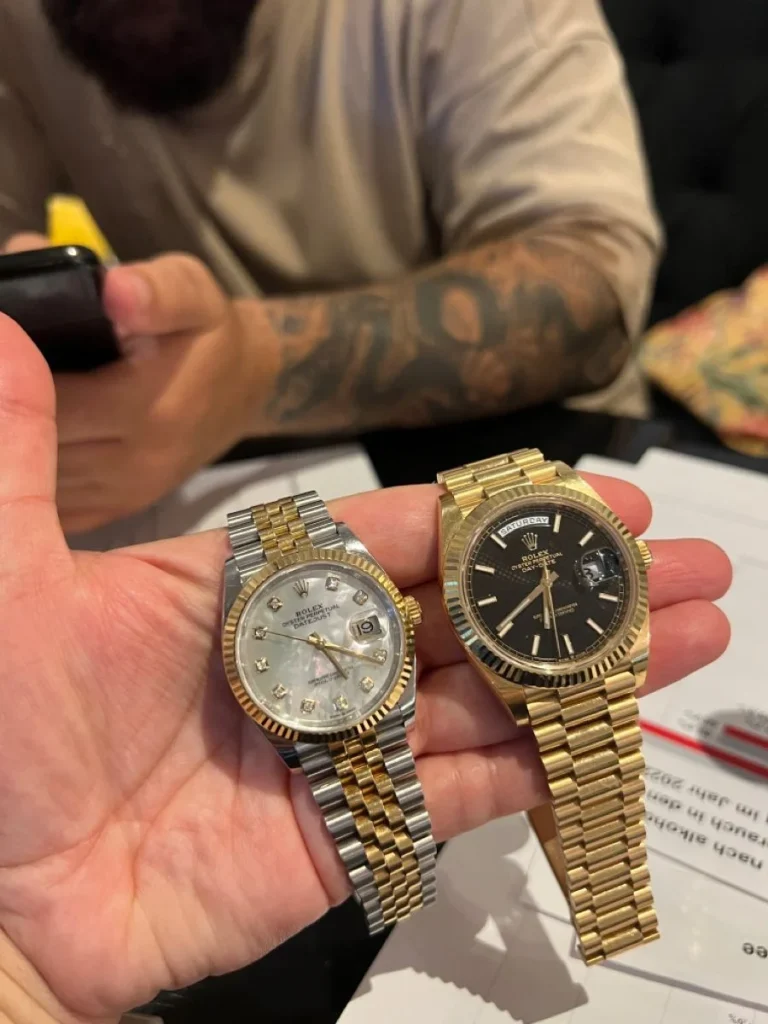
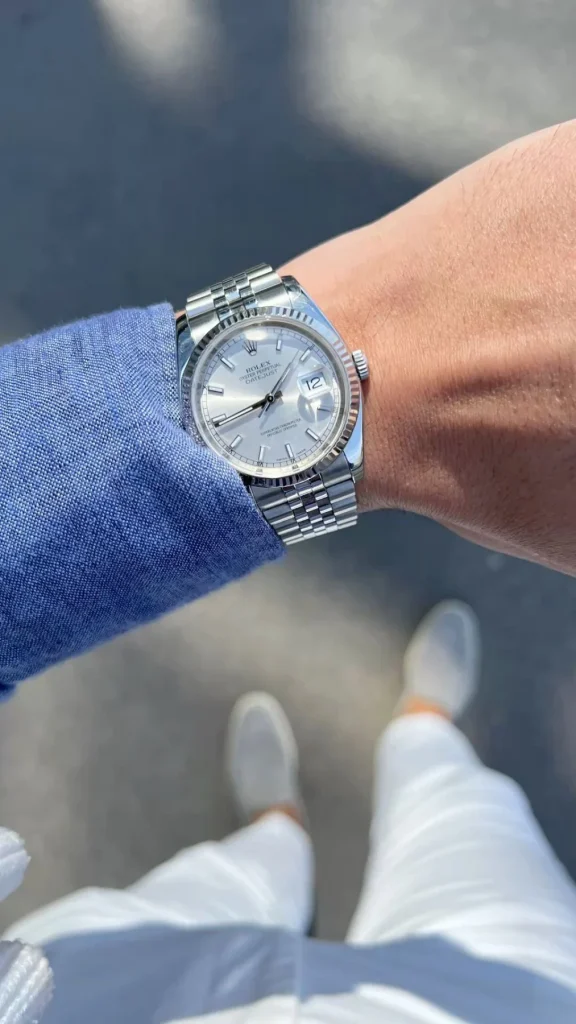
– **Rolex Datejust** – The first self-winding chronometer with a date window (1945). Fluted bezel, Jubilee bracelet, Cyclops magnifier.
Each model targets a specific lifestyle: Speedmaster appeals to explorers, Submariner to divers and style icons.
### 7. Pricing and Resale Value: Investment Potential
– **Retail prices**: Omega starts around $3,000–$4,000 for entry-level models; Rolex starts around $6,000–$8,000 (steel models).
– **Secondary market**: Rolex watches (e.g., Submariner, Daytona) often sell above retail due to scarcity. Omega models typically depreciate 20–30% in the first few years, though limited editions can hold value.
– **Investment**: Rolex is often considered a “store of value” (like gold), while Omega is better for pure horological enjoyment.
*Internal Link Opportunity:* Refer to Section 10 for tips on avoiding counterfeits that affect resale.
### 8. Innovation and Technology: Co-Axial vs. Parachrom
– **Omega**: Pioneered the Co-Axial escapement (1999), now standard across its lineup, requiring less frequent lubrication. Also uses silicon balance springs in many models.
– **Rolex**: Developed the Parachrom blue hairspring (2000), resistant to shocks and magnetic fields up to 1,000 Gauss. The newer 3235 movement adds Chronergy escapement for 70-hour power reserve.
Both brands are leaders in anti-magnetic technology, but Omega’s Master Chronometer certification (tested for accuracy in strong magnetic fields) gives it a slight edge in technical bragging rights.
### 9. Cultural Impact: Space, Cinema, and Sports
– **Omega** is inseparable from space exploration (NASA) and the James Bond franchise. Actors like George Clooney and Buzz Aldrin have been brand ambassadors.
– **Rolex** dominates tennis (Roger Federer, Novak Djokovic), golf (Tiger Woods), and motorsports (F1 sponsorship). Appears in countless films as a status symbol (e.g., *American Psycho*, *The Wolf of Wall Street*).
Both brands use celebrities effectively, but Omega leans into exploration, Rolex into achievement.
### 10. Counterfeiting and Authentication: How to Spot the Difference
Because Omega and Rolex are often faked, buyers should know:
– **Rolex fakes** often have misaligned Cyclops, rough bezel edges, and non-jeweled movements. Check for “smooth” sweeping seconds hand.
– **Omega fakes** may miss the correct Co-Axial escapement or lack the laser-etched Seahorse logo on the caseback.
– **Serial numbers**: Both brands engrave unique serial numbers (Rolex between lugs, Omega on the caseback or movement). Use official databases only.
*Internal Link Opportunity:* When buying used, see Section 7 for understanding pricing variations.
### 11. Which One Should You Choose? A Buying Guide
– **Choose Omega if**: You want a rich history (Moonwatch, Bond connection), better value for money, or a watch less likely to attract unwanted attention. Great for daily wearers who value innovation.
– **Choose Rolex if**: You prioritize prestige, resale potential, and a “forever watch.” Ideal for formal occasions or as a long-term investment.
– **Compromise**: Many collectors own both—e.g., a Rolex Submariner for versatility and an Omega Speedmaster for story.
### 12. Conclusion: Rivals, Not Relatives
Omega and Rolex are not the same company, but their rivalry has pushed both to extraordinary heights. Omega offers technical innovation and accessible heritage; Rolex offers unmatched status and investment resilience. Whether you are a budding enthusiast or a seasoned collector, understanding their differences helps you choose a timepiece that aligns with your values—and ensures you never confuse a Speedmaster for a Submariner again.
—
**Internal Linking Suggestions for This Page:**
– Link “Co-Axial Escapement” in Section 5 to a separate technical article on Omega movements.
– Link “Rolex Submariner” in Section 6 to a comparison page with the Tudor Black Bay.
– Link “Counterfeiting and Authentication” in Section 10 to a guide on verifying serial numbers.
– Link “Buying Guide” in Section 11 to a “First Luxury Watch” article on this site.
– Add subtle cross-links: e.g., from Section 3 “Swatch Group” to a page on Swatch Group brands.
Are Omega and Rolex the Same Company? The Definitive Guide to Two Watchmaking Giants
**Table of Contents (Topic Map)** 1. **The Short Answer: No, They Are Separate Companies** 2. **History and Founding: Two Different Origins** 3. **Ownership Structures: Swatch Group vs. the Hans Wilsdorf Foundation** 4. **Brand Positioning: Precision vs. Prestige** 5. **Manufacturing and Movements: In-House Capabilities Compared** 6. **Iconic Models: Speedmaster vs. Submariner, Seamaster vs. Datejust** 7. **Pricing […]
admin ·