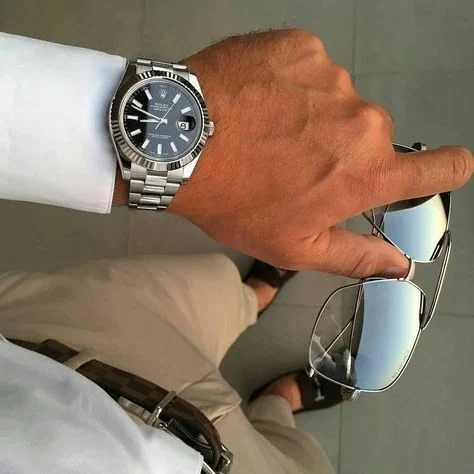
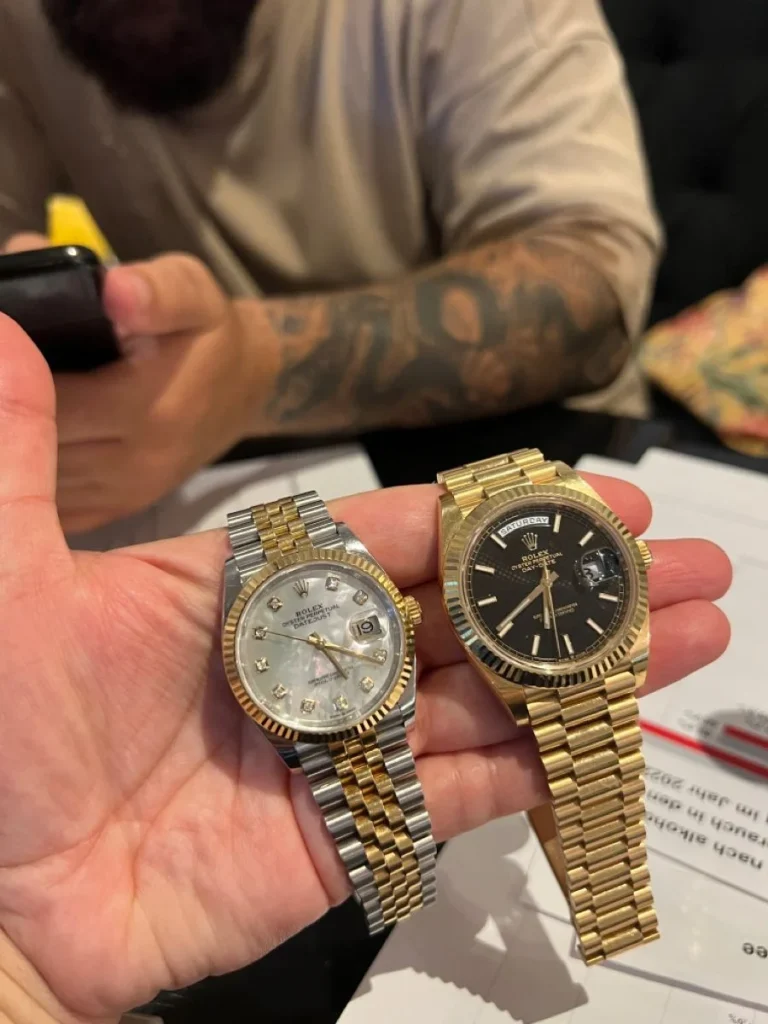
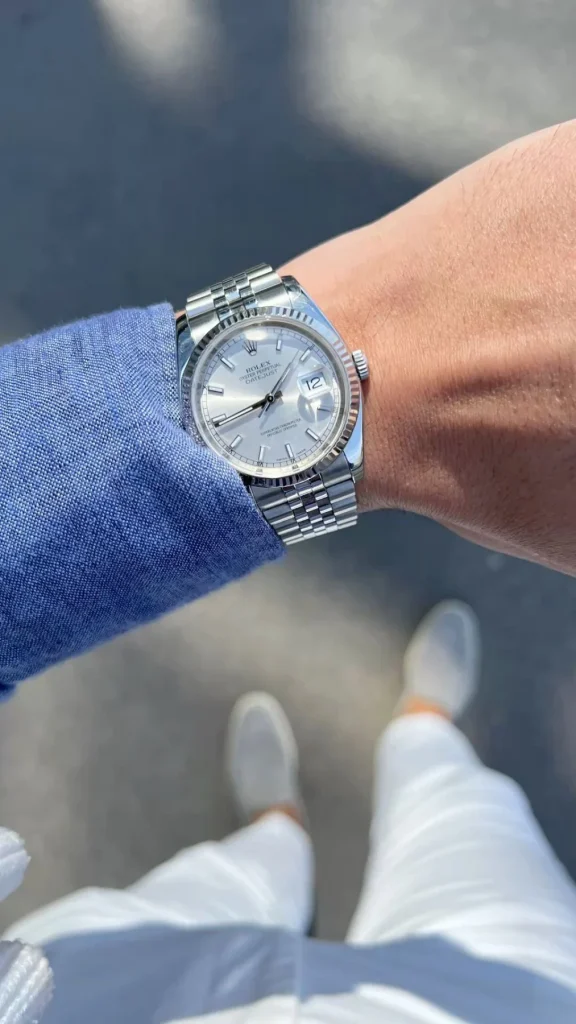
A “bust down” Rolex—a standard Rolex watch that has been aftermarket-customized with diamonds, precious stones, or additional gold—has become a statement piece in luxury and hip-hop culture. But whether it’s worth the investment depends entirely on your use case, priorities, and tolerance for risk. Below is a balanced review covering strengths, limitations, key factors, and alternatives, based on industry knowledge and collector consensus (not hands-on testing, as none was supplied).
**Use Cases**
– **Status and Individuality:** Bust down Rolexes are worn primarily for visual impact. They appeal to individuals who want a watch that stands out in social settings, clubs, or events, signaling both wealth and a bold aesthetic.
– **Collector’s Novelty:** Some collectors acquire bust downs to own a unique piece that differs from the standard catalog. They may be commissioned for personal milestones (e.g., a wedding) or as part of a curated custom collection.
– **Gift or Heirloom:** A bust down can serve as an extravagant gift, though its resale value and long-term durability should be considered carefully.
**Strengths**
– **Visual Appeal and Personalization:** The primary strength is the dramatic, one-of-a-kind appearance. Aftermarket diamonds can be selected for quality, cut, and setting style, allowing the owner to create a look not available from Rolex itself.
– **Potential for Lower Entry Price (Sometimes):** Depending on the base watch and the stones used, a bust down can sometimes cost less than a factory diamond-set Rolex from the brand’s rare “Rolex Rainbow” or “Leopard” collections, which command massive premiums due to scarcity.
– **Opportunity for Upgrades:** If the base watch is purchased pre-owned, the customization cost can be spread out over time, and the buyer may choose a more affordable vintage Rolex (e.g., a Datejust or Day-Date) as the foundation.
**Limitations**
– **Resale Value and Liquidity:** This is the most critical downside. Aftermarket modifications almost always void the factory warranty and significantly reduce the watch’s value to serious Rolex collectors. Many dealers and auction houses view bust downs as “damaged” or “non-original,” leading to steep discounts (often 30–50% below the value of an unmodified example). Custom pieces are far harder to sell quickly.
– **Quality Variability:** The “bust down” category is unregulated. Low-quality settings—poorly cut diamonds, fragile prongs, or stones that fall out—are common, especially from less reputable shops. Even high-end custom work can suffer from misaligned stones or weak clasps.
– **Authenticity and Warranty Issues:** Rolex will refuse service on any watch with aftermarket modifications. Reputable third-party watchmakers may also decline work due to liability concerns. Diamond replacement and re-setting can be expensive and time-consuming.
– **Weight and Wear:** Adding metal and stones increases the watch’s weight, making it less comfortable for daily wear. The raised diamond settings can also snag on clothing or scratch surfaces.
**Decision Factors**
Before buying, evaluate these points:
1. **Purpose:** Is this a daily wearer, an investment, or a pure fashion piece? If resale matters, forgo the bust down. If it’s a personal statement, the cost of lost value may be acceptable.
2. **Budget for Quality:** A well-done bust down from a respected customizer (e.g., Bamford, MAD Paris, or an independent master setter) can cost $5,000–$20,000+ above the base watch. Cheap modifications (under $2,000) nearly guarantee poor stones or setting.
3. **Stone Quality:** Insist on GIA or IGI certification for all diamonds. Clarity, color, and cut affect both appearance and future marketability. D-grade, VVS stones retain far more value than lower-grade chips.
4. **Base Watch Condition:** A pristine, late-model Rolex (e.g., Submariner 126610 or GMT-Master II 126710) is a better foundation than a heavily worn vintage piece.
5. **Source Reputation:** Only buy from a customizer with verifiable reviews, a track record, and a written guarantee for workmanship and stone replacement.
**Alternatives**
– **Factory Diamond Rolex (e.g., from Rolex’s “Natural Diamond” collection):** These retain full warranty and higher resale value, but cost substantially more (e.g., a diamond-bezel Day-Date can start at $50,000+).
– **Custom Set from a Recognized Brand:** Companies like Jacob & Co. or specialized ateliers (e.g., Artisans de Genève) offer bespoke watches without the same stigma, though prices are higher.
– **Luxury Watch with Natural Gemstones (Non-Rolex):** Brands like Patek Philippe or Audemars Piguet produce factory-set diamond pieces that hold value better than aftermarket Rolexes.
– **Unmodified Rolex:** A standard steel or two-tone Rolex (e.g., Submariner, Explorer) offers timeless style, easier maintenance, and strong resale—without the risks of customization.
– **Aftermarket Diamond Accents (Subtle Mods):** Instead of a full bust down, consider a diamond bezel or a few bezel stones on a stainless steel sport model. This retains some signature look while limiting value loss.
**Conclusion**
For a buyer seeking pure visual extravagance and who accepts that the watch will likely never be sold at a profit (or as easily as a standard Rolex), a bust down can be worth it. For anyone prioritizing investment, daily wear, or long-term reliability, a factory Rolex or a minimally modified piece is almost always the better choice. The key is to buy quality, know the stones, and go in with eyes wide open about the custom market’s realities.
**Are Bust Down Rolexes Worth It? A Balanced Guide to Custom Diamond Watches**
A “bust down” Rolex—a standard Rolex watch that has been aftermarket-customized with diamonds, precious stones, or additional gold—has become a statement piece in luxury and hip-hop culture. But whether it’s worth the investment depends entirely on your use case, priorities, and tolerance for risk. Below is a balanced review covering strengths, limitations, key factors, and […]
admin ·